A royal project, a republican opening
At the turn of the twentieth century, the mineral springs of Vidago were famous across Portugal, and King Carlos I encouraged the construction of a grand hotel worthy of Europe's great spa towns. The king was assassinated in Lisbon in 1908, before the building was finished, and when Vidago Palace finally opened in 1910 — the same year the monarchy fell and Portugal became a republic — it was a palace without a sovereign. It welcomed high society nonetheless, and for decades was among the most fashionable resorts on the Iberian Peninsula.
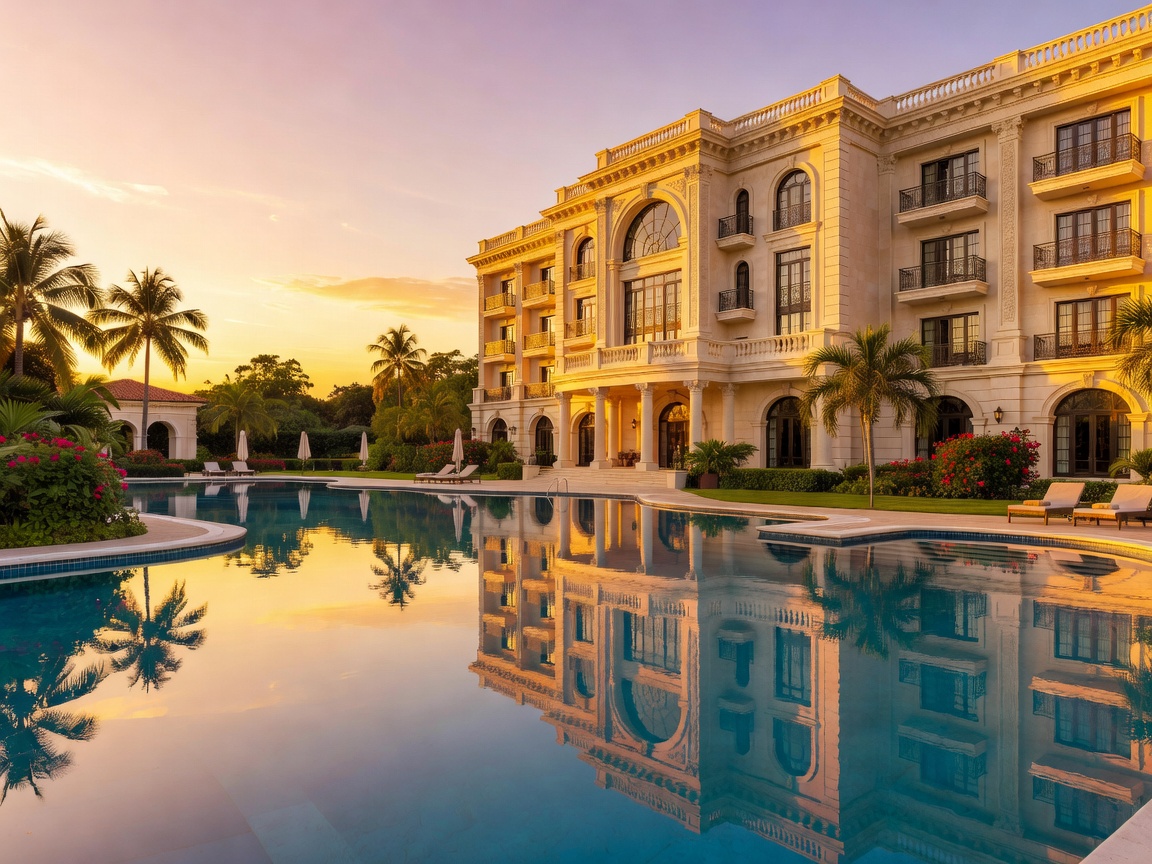
Its façade, painted in soft rose and white, rises above a vast historic park of mature trees, lakes and pavilions built over the springs. A monumental staircase and a ballroom-scale dining room give the interiors a sense of ceremony rarely found outside capital cities.
The 2010 restoration
After a long period of decline, the hotel was comprehensively restored and reopened in 2010, a century after its first opening. The most admired addition is the thermal spa designed by Álvaro Siza, the Pritzker Prize–winning Portuguese architect, whose calm white volumes sit discreetly within the park and use the famous local mineral water.
"Few places combine Belle Époque theatre and Siza's quiet modernism so gracefully."Editor's impression
Golf and the park
The hotel's golf course, laid out in the 1930s and redesigned as an 18-hole parkland course by the firm Cameron & Powell as part of the restoration, winds between centuries-old trees. Walking trails, springs and pavilions make the grounds a destination in themselves, even for non-golfers.
Dining
The grand dining room celebrates the cooking of northern Portugal — smoked meats of Trás-os-Montes, river fish, chestnuts and mushrooms in season — alongside an extensive list of Douro and Vinho Verde wines. A lighter clubhouse offering serves golfers and spa guests.
Who it suits
- Spa-goers seeking genuine thermal traditions in an architectural setting.
- Golfers who enjoy tree-lined parkland rather than coastal links.
- Road-trippers combining the Douro Valley with Portugal's quiet interior.